Why Proving Fault Is the Key to Winning Your Accident Claim
When you’re involved in a vehicle accident, everything that follows—insurance claims, medical bills, repairs, and potential legal action—hinges on one critical factor: fault. Determining who is legally responsible for the accident directly impacts who pays for damages and how much compensation is available.
Many people assume fault is obvious, especially in straightforward collisions. However, proving fault is rarely as simple as it seems. Insurance companies often conduct their own investigations, and even small details can shift liability percentages. In some cases, multiple parties may share responsibility, which can complicate your claim even further.
Understanding how to prove fault effectively gives you a major advantage. It allows you to protect your rights, strengthen your case, and avoid common pitfalls that could reduce your compensation. This guide walks you through the most important steps, strategies, and evidence needed to build a strong claim and demonstrate exactly what happened.
Gather Strong Evidence Immediately at the Scene

The moments immediately following an accident are some of the most important for building your case. Evidence collected at the scene can make the difference between a successful claim and one that’s disputed or denied.
Start by taking as many photos and videos as possible. Capture the positions of the vehicles, damage to each car, skid marks, road conditions, traffic signs, and any visible injuries. Wide-angle shots help establish context, while close-ups document specific details. If there are hazards like debris or poor lighting, be sure to include those as well.
Witnesses can also provide powerful support. If anyone saw the accident happen, ask for their name and contact information. Their statements can offer an unbiased perspective that strengthens your version of events.
It’s also important to document environmental conditions. Weather, time of day, and traffic flow all play a role in how an accident is interpreted. Even something as simple as a malfunctioning traffic light can shift responsibility.
A car accident lawyer often emphasizes how critical this early evidence is. The more thorough your documentation, the harder it becomes for opposing parties to dispute your claim. Acting quickly ensures that key details aren’t lost or forgotten.
Obtain and Review the Police Report Carefully
After an accident, law enforcement typically creates an official report documenting what happened. This report is one of the most influential pieces of evidence in determining fault.
The report usually includes details such as the date, time, and location of the accident, statements from drivers and witnesses, diagrams of the scene, and any citations issued. If one driver is cited for a traffic violation, it can strongly support a claim of negligence.
However, it’s important not to assume the report is flawless. Officers rely on the information available at the scene, and mistakes can happen. Review the report carefully once it’s available. Check for inaccuracies in names, vehicle descriptions, or statements.
If you find an error, take steps to correct it as soon as possible. This may involve contacting the reporting officer or providing additional documentation. Even minor inaccuracies can be used against you during a claim.
An accident attorney understands how to interpret police reports and use them effectively. They can identify key details that support your case and address any inconsistencies that might weaken your position.
By ensuring the report is accurate and complete, you strengthen one of the foundational elements of your claim.
Use Witness Testimony to Strengthen Your Case
Witness testimony can play a crucial role in proving fault, especially when the parties involved have conflicting accounts of what happened. A neutral third-party perspective often carries significant weight with insurers and courts.
When speaking with witnesses, try to gather their statements as soon as possible. Memories fade quickly, and details can become less reliable over time. If they’re willing, ask them to provide a written or recorded account of what they saw.
Focus on witnesses who had a clear view of the accident. Their ability to describe key moments—such as which driver ran a red light or failed to yield—can help establish liability.
It’s also helpful to note the credibility of each witness. Factors such as their location, relationship to the parties involved, and consistency in their statements can influence how their testimony is perceived.
Accident attorneys often use witness statements to reinforce other evidence, such as photos or police reports. When multiple sources align, it creates a more compelling narrative of what occurred.
Strong witness testimony can be the deciding factor in close cases, providing clarity when other evidence is inconclusive.
Preserve Medical Records and Injury Documentation
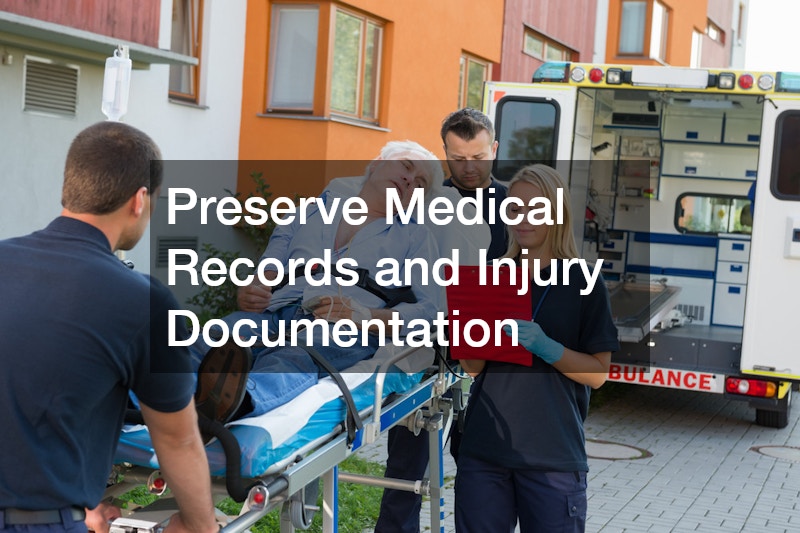
Medical records are essential for linking your injuries directly to the accident. Without proper documentation, it becomes much more difficult to prove the extent of your damages and their cause.
Seek medical attention as soon as possible, even if your injuries seem minor. Some conditions, such as whiplash or internal injuries, may not show symptoms immediately. A prompt evaluation creates a clear record that connects your injuries to the accident.
Keep detailed records of all treatments, diagnoses, prescriptions, and follow-up visits. This includes physical therapy, specialist consultations, and any recommended procedures. Save receipts and bills to document the financial impact.
Photographs of injuries can also provide valuable visual evidence. Over time, these images can demonstrate the progression and severity of your condition.
An injury attorney uses this documentation to establish both the cause and the cost of your injuries. By showing a clear timeline from the accident to your medical treatment, they can strengthen your claim significantly.
Consistent and thorough medical documentation ensures that your injuries are taken seriously and properly evaluated during the claims process.
Analyze Traffic Laws and Violations That Apply
Traffic laws provide a framework for determining fault. When a driver violates these laws, it often serves as strong evidence of negligence.
Common violations include speeding, running red lights, failing to yield, and distracted driving. Each of these actions increases the likelihood of an accident and can be used to establish responsibility.
Understanding which laws apply to your situation is key. For example, right-of-way rules vary depending on the type of intersection or roadway. Knowing these details helps clarify who had the legal obligation to act differently.
In some cases, multiple violations may be involved. One driver might have been speeding while another failed to signal. Determining how these factors contributed to the accident is essential for assigning fault accurately.
A vehicle accident attorney can analyze the circumstances of your case and identify relevant violations. They use this information to build a strong argument that demonstrates how the other party’s actions led to the collision.
By aligning your evidence with established traffic laws, you create a clear and logical basis for proving fault.
Leverage Photos, Videos, and Surveillance Footage

Visual evidence is one of the most powerful tools in any accident claim. Photos and videos provide an objective record of what happened, making it easier to establish fault.
In addition to the images you capture at the scene, look for other sources of footage. Dashcams, traffic cameras, and nearby businesses may have recorded the accident. Acting quickly is crucial, as many systems overwrite footage after a short period.
When reviewing visual evidence, pay attention to details such as vehicle positions, speed, and driver behavior. Even small elements—like brake lights or turn signals—can provide important clues.
Organizing this evidence is just as important as collecting it. Label each file with the date, time, and location to ensure it can be easily referenced later.
An auto accident attorney knows how to present visual evidence effectively. They can highlight key moments and connect them to other pieces of evidence, creating a cohesive and persuasive case.
Strong visual documentation can eliminate ambiguity and provide a clear picture of how the accident occurred.
Work With Experts to Reconstruct the Accident
In complex cases, expert analysis may be necessary to determine exactly what happened. Accident reconstruction specialists use scientific methods to analyze factors such as speed, impact angles, and vehicle damage.
These experts often rely on data from the vehicles themselves, including black box information, as well as physical evidence from the scene. Their findings can provide a detailed explanation of how the accident unfolded.
Reconstruction can be especially valuable when there are no witnesses or when accounts conflict. By presenting a technical analysis, experts can clarify details that might otherwise remain disputed.
It’s important to preserve evidence for this process. Avoid repairing your vehicle too quickly, as damage patterns can provide critical insights.
An auto injury lawyer works closely with these experts to integrate their findings into your case. Their combined efforts can create a compelling narrative supported by both evidence and expert opinion.
Using expert analysis adds another layer of credibility to your claim, making it more difficult for opposing parties to challenge your version of events.
Avoid Common Mistakes That Can Hurt Your Claim
Even with strong evidence, certain mistakes can weaken your case. Being aware of these pitfalls helps you protect your claim from the start.
One of the most common errors is admitting fault at the scene. Even a simple apology can be interpreted as an admission of responsibility. It’s best to stick to factual statements and avoid speculation.
Social media is another potential risk. Posting about the accident or your injuries can provide information that insurers may use against you. Keeping details private is the safest approach.
Delaying medical treatment is also problematic. Gaps in care can raise questions about the severity of your injuries or whether they were caused by the accident.
A personal injury lawyer can guide you through these challenges and help you avoid actions that could undermine your case. They provide advice on how to communicate with insurers and ensure your rights are protected.
Being mindful of these common mistakes helps preserve the strength of your claim and keeps your case on track.
Understand How Insurance Companies Evaluate Fault

Insurance companies use their own methods to determine fault, and their conclusions don’t always align with your perspective. Understanding how they evaluate claims can help you prepare more effectively.
Adjusters review evidence such as police reports, witness statements, and medical records. They may also consider state laws regarding comparative or contributory negligence, which determine how fault is shared.
In comparative negligence states, compensation may be reduced based on your percentage of fault. For example, if you are found to be 20% responsible, your compensation could be reduced by that amount.
Insurance companies are also motivated to minimize payouts. This means they may look for ways to shift blame or downplay your damages. Being prepared with strong evidence helps counter these tactics.
A personal injury law firm can handle negotiations on your behalf, ensuring your claim is presented clearly and effectively. Their experience with insurance practices allows them to anticipate challenges and advocate for fair compensation.
Understanding this process puts you in a stronger position and helps you navigate the complexities of your claim.
Build a Strong Legal Strategy for Maximum Compensation
Proving fault isn’t just about gathering evidence—it’s about presenting it in a way that clearly demonstrates liability and supports your claim for compensation.
Start by organizing your evidence into a clear timeline. This helps illustrate how the accident occurred and how your injuries developed. Consistency across all documentation is key.
Prepare for negotiations by understanding the value of your claim. This includes medical expenses, lost income, property damage, and pain and suffering. Having a comprehensive view ensures you don’t settle for less than you deserve.
In some cases, litigation may be necessary. Being prepared for this possibility strengthens your position during negotiations.
Car accident attorneys use a combination of evidence, expert analysis, and legal strategy to build compelling cases. Their ability to present information effectively can make a significant difference in the outcome.
A well-structured approach ensures that every piece of evidence supports your claim, increasing your chances of achieving a favorable result.
Take Control of Your Claim and Protect Your Rights
Proving fault in a vehicle accident claim requires careful attention to detail, timely action, and a clear understanding of how evidence is used. From documenting the scene to working with professionals and avoiding common mistakes, each step plays a vital role in building a strong case.
By taking a proactive approach, you not only improve your chances of success but also reduce the stress and uncertainty that often come with accident claims. With the right preparation and support, you can confidently navigate the process and secure the compensation your situation deserves.
Ultimately, the effort you put into proving fault today can have a lasting impact on your financial recovery and peace of mind moving forward.